
Read, read, read. Read everything.
William Faulkner
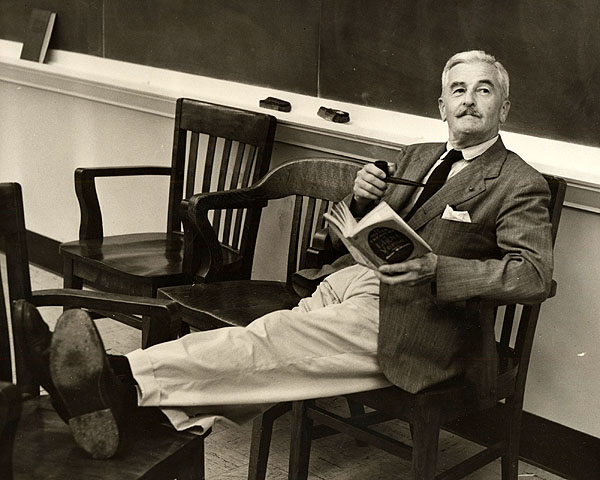
The Power of Endless Reading
With this direct yet powerful advice, William Faulkner captures the essence of literary immersion. His call to “read everything” suggests a dedication to learning from the full spectrum of human thought and creativity. Faulkner understood that every piece of writing—whether a classic novel, a poorly written pamphlet, or a sensational news article—holds lessons for writers. Even flawed works teach us what not to do, sharpening our critical eye.
This quote also highlights a more subtle truth: reading widely exposes us to countless perspectives, expanding our understanding of people and places far removed from our own. For Faulkner, writing was about more than polished prose; it was a reflection of the complexities and contradictions of the human spirit. Reading, therefore, becomes essential not only to refine one’s voice but to empathise with the lives and struggles of others.
Who Was William Faulkner?
William Faulkner (1897–1962) was an American novelist and Nobel Prize winner renowned for his complex prose style and exploration of life in the American South. His works, like The Sound and the Fury and As I Lay Dying, focus on themes of family, identity, and morality, often through unconventional storytelling techniques, such as multiple narrators and fragmented timelines. Faulkner’s intricate portrayal of human flaws and strengths has cemented his status as a literary titan.
A Quirky Tidbit
Known for his notoriously thick Southern accent, Faulkner once worked as a postmaster but was fired for reading on the job instead of actually, well, delivering the post. This irony perfectly reflects his unshakable devotion to literature—a devotion so strong that he couldn’t even set a book aside long enough to handle the day’s letters!
So, next time you reach for a book, remember Faulkner’s words: “Read everything.” After all, each page—brilliant or bad—adds a new dimension to the world you’re building within.
