
Don’t let the perfect be the enemy of the good
Rishi Sunak
In his speech to the nation amid the Coronavirus (COVID-19) outbreak, The UK Chancellor of the Exchequer loosely referred to the Voltaire quote “The best is the enemy of the good”.
A reporter asked him a question and the quote was part of the answer.
https://www.bbc.co.uk/news/uk-52053914
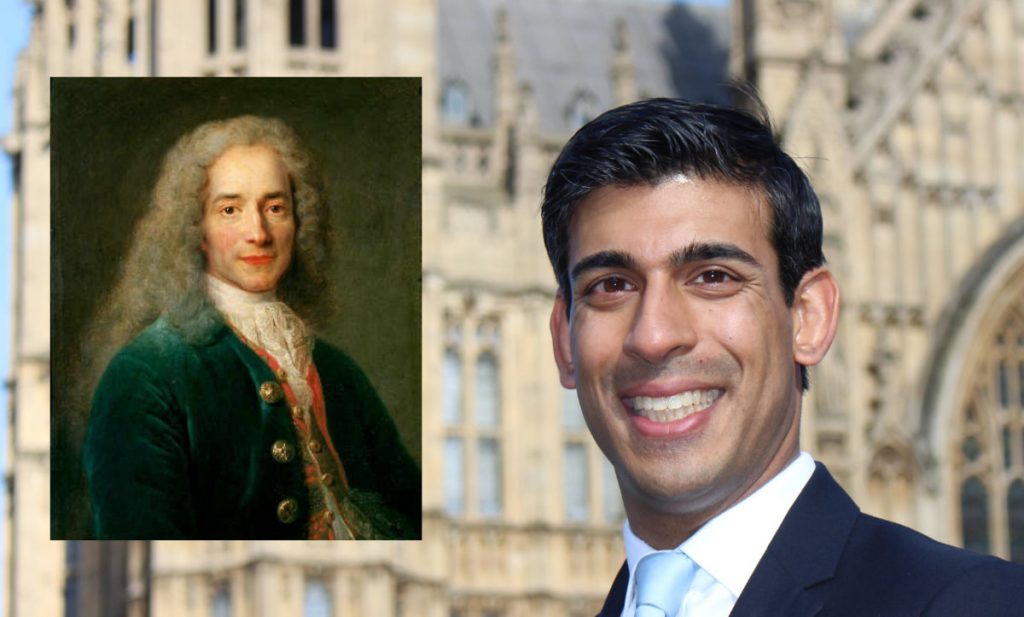
“Don’t Let the Perfect Be the Enemy of the Good” – Rishi Sunak’s Adaptation of Voltaire’s Wisdom
When Rishi Sunak, then UK Chancellor of the Exchequer, urged the public not to “let the perfect be the enemy of the good,” he was calling for flexibility and pragmatism in the unprecedented crisis of COVID-19. In the midst of a major national response, he highlighted a crucial perspective: in times of extreme uncertainty, seeking a “perfect” solution could hinder practical and effective action.
Context and Meaning Behind the Quote
The phrase is an adaptation of an older French proverb popularised by Enlightenment writer Voltaire: “Le mieux est l’ennemi du bien,” translated as “The best is the enemy of the good.” This concept promotes the idea that holding out for perfection often blocks achievable, beneficial outcomes. In situations demanding urgency, such as a pandemic, striving to meet ideal standards or perfect conditions can paralyse progress and make it difficult to address immediate needs.
Sunak’s statement came during a 2020 address focused on explaining the economic and social measures introduced to combat COVID-19, particularly to support businesses and workers affected by lockdowns. When asked by a reporter about potential shortcomings of these measures, Sunak’s response included this phrase to convey the importance of adaptability. He implied that even if the measures weren’t flawless, they were urgently needed to prevent a worse situation.
About Rishi Sunak: Background and Role in the COVID-19 Response
Rishi Sunak was appointed Chancellor of the Exchequer in February 2020, just a month before the UK entered the initial phases of the COVID-19 crisis. As a relatively new face in this critical role, Sunak quickly became central to the government’s response, unveiling a series of emergency financial support packages, such as the furlough scheme, to aid workers and businesses. His economic measures were historic in scale, reflecting a blend of conservative and emergency-driven fiscal policy.
Despite the gravity of the situation, Sunak’s calm delivery and empathetic language helped convey his message to a population facing an overwhelming amount of change. The quote embodies his approach: prioritising actionable, good-enough solutions over waiting for an elusive ideal.
The Origins of Voltaire’s Wisdom
Voltaire, a leading philosopher of the Enlightenment, was known for advocating reason, freedom of speech, and social reform. His expression “Le mieux est l’ennemi du bien” appears to stem from his emphasis on practical wisdom over rigid idealism. The quote suggests that, in any form of progress, perfectionism can become counterproductive.
The saying has since evolved into a popular caution against perfectionism, especially in fields requiring rapid decision-making. By 2020, it held new resonance as governments worldwide grappled with balancing effective health and economic policies under pressure.
A Modern Take on Classic Wisdom
Rishi Sunak’s use of this adapted proverb during the pandemic subtly reminded people that pragmatism often prevails over perfection in times of crisis. The phrase quickly spread through media coverage, resonating with audiences experiencing the tension between idealism and real-life limitations. It underscores an enduring truth: sometimes, aiming for “good enough” can be a life-saving choice.
Read More:
Voltaire –
https://en.wikipedia.org/wiki/Perfect_is_the_enemy_of_good
https://en.wikiquote.org/wiki/Voltaire
Rishi Sunak –
https://en.wikipedia.org/wiki/Rishi_Sunak
https://www.rishisunak.com/
