
Kryten’s right; the Epideme virus may have cost you a limb but there are countless people who have lost an arm, and then gone on to lead a perfectly “normal” life.
Kristine Kochanski – Red Dwarf
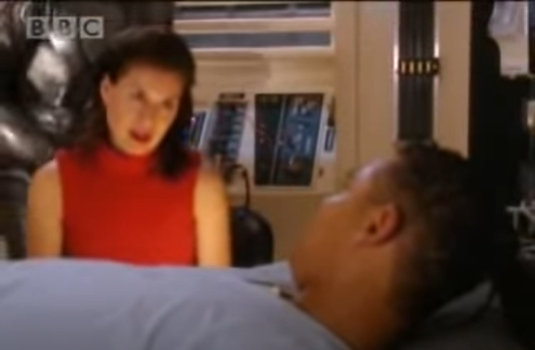
Kristine Kochanski mimes the verbal air quote marks twice, using only one hand.
Introduction
Red Dwarf is a British science fiction television series that has gained a cult following over the years. The show follows the adventures of the last surviving human, Dave Lister, and his crewmates aboard the spaceship Red Dwarf. One of the show’s recurring characters is Kristine Kochanski, played by actress Chloe Annett. In Series 7, Episode 7, Kochanski delivers a memorable line that has resonated with fans ever since.
The Quote and Its Meaning
In the episode “Epideme,” Dave Lister, the crew member, contracts a virus that causes him to lose his arm. Lister becomes despondent, feeling like he is now “less than perfect.” Kryten, the ship’s android, tries to cheer Lister up by saying that he will adapt to his new situation. Kochanski responds by saying, “Kryten’s right; the Epideme virus may have cost you a limb but there are countless people who have lost an arm, and then gone on to lead a perfectly” (here she does air quotes with one hand, twice) “normal” life.”
The quote is about resilience and overcoming challenges in life. Kochanski is reminding Lister that although losing a limb can be difficult, it doesn’t have to define one’s life. Many people who have lost limbs have gone on to lead successful and fulfilling lives. Kochanski’s use of the air quotes with one hand twice instead of two reflects the fact that Lister only has one arm and is the joke of the scene. It adds a touch of humour to the quote while also highlighting the reality of Lister’s situation.
The Significance of the Quote
The quote has become a fan favourite because it speaks to the human experience of facing adversity. Everyone goes through difficult times in their lives, whether it’s losing a loved one, facing an illness, or experiencing a setback. The quote reminds us that although these challenges can be difficult, we can still live full and meaningful lives.
Moreover, the use of air quotes in the quote adds a layer of humour to the scene while also highlighting the importance of empathy and support from others. Kochanski’s words help Lister to see that he is not alone and that others have faced similar challenges. This support can be crucial in helping someone overcome their difficulties.
Conclusion
Kristine Kochanski’s quote in Red Dwarf’s “Epideme” episode is a powerful reminder that challenges in life don’t have to define us. Although losing a limb can be difficult, many people have gone on to lead fulfilling lives. Kochanski’s use of air quotes with one hand twice adds a touch of humour to the quote while also highlighting the reality of Lister’s situation. The quote has resonated with fans because it speaks to the human experience of facing adversity and overcoming it, while also emphasizing the importance of empathy and support from others during difficult times.

https://reddwarf.fandom.com/wiki/RD:_Epideme
http://www.cervenytrpaslik.cz/scenare/EN-44-7_Nanarchy.htm
What are Air Quotes?
Air quotes, also known as finger quotes, are a gesture made by using two fingers on each hand to curl and extend the fingers, mimicking the shape of quotation marks in the air. The gesture is commonly used to indicate that the speaker is using a word or phrase in a figurative or ironic sense, or to imply scepticism or disbelief about the meaning of a word or phrase.
Air quotes are often employed when someone wants to emphasize that a particular word or phrase should be understood in a non-literal or unconventional way. They can be used to convey sarcasm, irony, or to suggest that a term is being used euphemistically. By making the air quotes gesture while speaking, the person signals that they are distancing themselves from the literal interpretation of the word or phrase, or that they are aware of its problematic or questionable nature.
For example, if someone says, “He’s a real ‘genius’,” using air quotes around the word “genius” suggests that they don’t genuinely consider the person to be a genius, but rather the opposite. It adds a layer of implied meaning or scepticism to the statement.
Air quotes have become a recognizable part of popular culture and are often used in informal conversations, comedic performances, or when discussing ambiguous or debatable concepts.
