
Don’t get rid of my devils, because my angels will go too.
W. H. Auden.
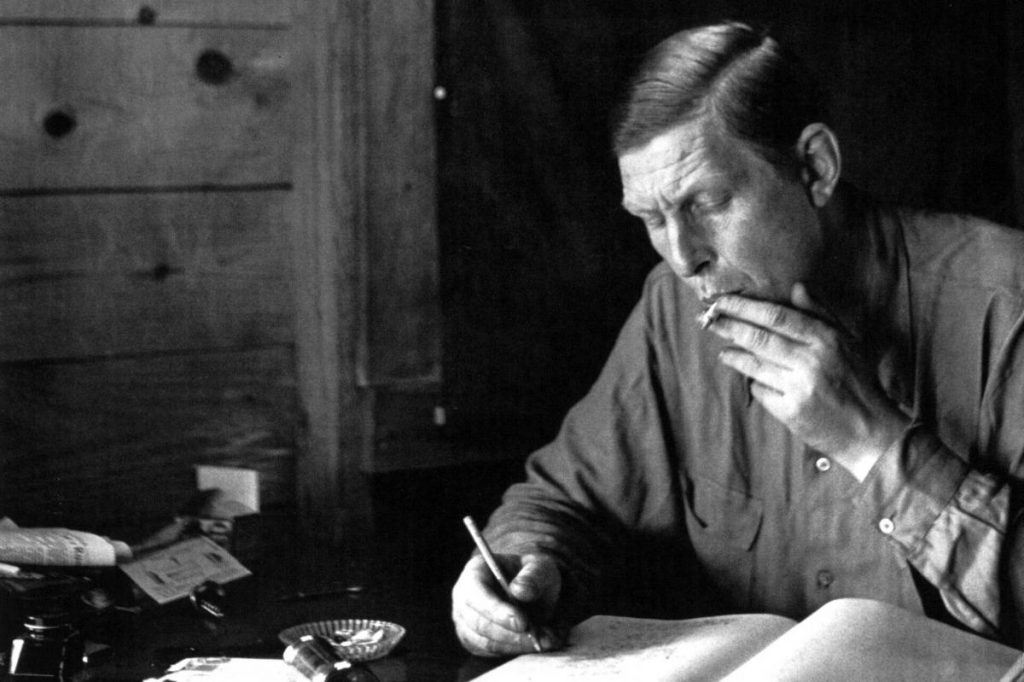
Wikipedia: https://en.wikipedia.org/wiki/W._H._Auden
Poetry Foundation: https://www.poetryfoundation.org/poets/w-h-auden
Don’t get rid of my devils, because my angels will go too.
W.H. Auden was a British poet, known for his poignant and thought-provoking works. One of his most famous quotes is, “Don’t get rid of my devils, because my angels will go too.” Let’s take a closer look at the meaning behind this quote.
The Context of the Quote
The quote comes from a letter Auden wrote to a friend in 1940. In the letter, he was discussing his struggles with mental illness and how he felt about the idea of trying to eliminate the negative aspects of his personality. He wrote, “I have wished to get rid of my devils, but I am afraid that if I lost them, my angels would go too.”
The Meaning of the Quote
The quote is a powerful statement about the duality of human nature. Auden is acknowledging that he has both good and bad qualities and that trying to eliminate one aspect of himself would mean losing the other as well. In a sense, he is saying that his flaws and imperfections are a necessary part of who he is and that without them, he would not be the same person.
The Significance of the Quote
The quote has resonated with many people over the years because it speaks to the universal struggle of trying to accept and love oneself, flaws and all. It reminds us that we are complex beings and that our imperfections are just as important as our strengths. By embracing our whole selves, we can live more fully and authentically.
Applying the Quote to Our Lives
We all have parts of ourselves that we wish we could change or get rid of. However, the quote reminds us that these “devils” are a necessary part of who we are. Rather than trying to eliminate them, we should strive to accept and embrace them, along with our “angels.” This can be a difficult process, but it is essential for living a fulfilling life.
Conclusion
W.H. Auden’s quote, “Don’t get rid of my devils, because my angels will go too,” is a powerful reminder of the importance of accepting and embracing all parts of ourselves. It encourages us to be honest about our flaws and imperfections and to recognize that they are an essential part of who we are. By doing so, we can live more authentically and find greater peace and fulfilment in our lives.
W. H. Auden: A Life in Poetry
W. H. Auden was one of the most influential poets of the 20th century. Born in England in 1907, he spent much of his life travelling and writing, producing a body of work that is still celebrated today.
Early Years and Education
Auden was born in York, England, in 1907. His father was a physician, and his mother was a nurse. Auden was the youngest of three sons, and his parents were both devout Anglicans. Auden’s early years were marked by a love of literature and a fascination with language. He attended Oxford University, where he studied English literature and became involved in the university’s literary scene.
After graduating from Oxford, Auden spent several years travelling throughout Europe and China. During this time, he began to develop his own unique style of poetry, which was characterized by its use of complex language and its exploration of philosophical themes.
Home Life and Personal Life
Auden was a private person, and little is known about his personal life. He was openly gay, and his sexuality was a recurring theme in his poetry. He had several long-term relationships throughout his life, including a 30-year partnership with Chester Kallman.
Auden was also known for his political activism. He was a socialist and a pacifist, and his political beliefs were reflected in his poetry. He was a strong critic of fascism and totalitarianism, and he was a vocal opponent of the Vietnam War.
Major Works
Auden’s poetry is characterized by its use of complex language and its exploration of philosophical themes. Some of his most famous works include “Funeral Blues,” “The Shield of Achilles,” and “September 1, 1939.” He also wrote several plays, including “The Dance of Death” and “The Ascent of F6.”Auden’s poetry was widely celebrated during his lifetime, and he was awarded numerous honours and awards, including the Pulitzer Prize for Poetry in 1948. His work continues to be studied and celebrated today.
Literary Style
Auden’s poetry is known for its use of complex language and its exploration of philosophical themes. He often used classical forms, such as the sonnet and the villanelle, in his poetry. His work is also characterized by its use of irony and its exploration of the human condition.
Auden’s poetry is often divided into two distinct periods: his early work, which was characterized by its political and social commentary, and his later work, which was more introspective and focused on personal themes.
W. H. Auden’s Legacy
Auden’s poetry continues to be celebrated today for its complexity and its exploration of philosophical themes. His work has influenced countless poets and writers, and his legacy continues to inspire new generations of artists.
In conclusion, W. H. Auden was a poet of great talent and influence. His work continues to be celebrated today, and his legacy lives on in the countless poets and writers who have been inspired by his work.
From Divine Guardians to Sinister Tempters: A Collection of Quotes about Angels and Devils
Step into a world where the forces of good and evil collide, where celestial beings and dark tempters hold sway over our deepest desires. In “From Divine Guardians to Sinister Tempters: A Collection of Quotes about Angels and Devils,” we embark on a captivating journey through the realms of the heavenly and the infernal. This mesmerizing collection of quotes unveils the age-old fascination with angels and devils, shedding light on their multifaceted nature and the eternal struggle between light and darkness. From the angelic protectors who offer solace and guidance to the sinister seducers who prey on our vulnerabilities, these quotes delve into the depths of human imagination and belief. Whether you seek inspiration, contemplation, or simply a glimpse into the realms beyond, this compilation will enchant and captivate you. Join us as we explore the eternal battle between heaven and hell through the power of words, and discover the profound wisdom and eternal truths hidden within.
Quotes about angels and their divine qualities
Angels, with their ethereal beauty and divine qualities, have captivated the human imagination for centuries. These celestial beings are often viewed as messengers of the divine, bridging the gap between heaven and earth. As Ralph Waldo Emerson once said, “The angels are so enamoured of the language that is spoken in heaven that they will not distort their lips with the hissing and unmusical dialects of men, but speak their own, whether there be any who understand it or not.” This quote emphasizes the purity and otherworldly nature of angels, suggesting that they communicate in a language beyond human comprehension.
Another quote, attributed to Saint Augustine, explores the idea of angels as guardians and protectors. “Angels are spirits, but it is not because they are spirits that they are angels. They become angels when they are sent.” This quote highlights the role of angels as divine messengers, entrusted with specific missions from the heavens. It implies that angels are chosen and transformed into celestial beings with a purpose to fulfil.
In the words of John Milton, “Millions of spiritual creatures walk the earth unseen, both when we wake and when we sleep.” This quote encapsulates the belief that angels are ever-present, watching over humanity in both waking and sleeping moments. It suggests that angels exist in a realm beyond our perception, constantly observing and guiding us.
Quotes about devils and their sinister nature
In contrast to the angelic realm, devils embody the darker side of the supernatural. These malevolent creatures are often associated with temptation, deceit, and the corruption of human souls. As Oscar Wilde famously wrote, “We are each our own devil, and we make this world our hell.” This quote suggests that the devil resides within each individual, representing the potential for evil and the temptation to succumb to sinful desires.
Another quote, attributed to Friedrich Nietzsche, delves into the deceptive nature of devils. “Whoever fights monsters should see to it that in the process he does not become a monster. And if you gaze long enough into an abyss, the abyss will gaze back into you.” This quote warns of the dangers of engaging with the devilish forces, cautioning that prolonged exposure to darkness can corrupt even the strongest of individuals.
William Shakespeare, in his play Othello, offers a haunting image of the devil. “Iago: …when devils will the blackest sins put on, they do suggest at first with heavenly shows, as I do now.” This quote highlights the devil’s ability to disguise its true nature and deceive others by appearing as something virtuous or innocent.
Contrasting quotes about angels and devils
The contrast between angels and devils is a recurring theme in literature and mythology. These opposing forces represent the eternal struggle between good and evil, light and darkness. As William Blake once wrote, “When I tell the truth, it is not for the sake of convincing those who do not know it, but for the sake of defending those that do.” This quote suggests that angels embody truth and righteousness, using their powers to protect and defend the virtuous.
On the other hand, the devil is often associated with temptation and deception. As Charles Baudelaire wrote in his book, “The devil’s finest trick is to persuade you that he does not exist.” This quote reflects the devil’s cunning nature, suggesting that the most dangerous aspect of the devil is its ability to convince humans of its nonexistence, thereby luring them into darkness.
Quotes about the battle between good and evil
The battle between good and evil is a recurring motif in literature and religious texts. As C.S. Lewis wrote in his book, “There is no neutral ground in the universe. Every square inch, every split second is claimed by God and counterclaimed by Satan.” This quote emphasizes the all-encompassing nature of the battle between good and evil, suggesting that every aspect of existence is influenced by these opposing forces.
In a similar vein, Friedrich Nietzsche wrote, “Beware that, when fighting monsters, you yourself do not become a monster… for when you gaze long into the abyss, the abyss gazes also into you.” This quote warns of the potential for individuals to be consumed by darkness while fighting against evil, reminding us to remain vigilant and avoid becoming what we fight against.
Quotes about the role of angels and devils in human lives
Angels and devils play a significant role in shaping human lives and influencing our choices. In the words of Victor Hugo, “The soul has illusions as the bird has wings: it is supported by them.” This quote suggests that angels and devils have the power to inspire and guide the human soul, leading us towards either enlightenment or corruption.
Similarly, in the words of William Shakespeare, “We know what we are, but know not what we may be.” This quote implies that angels and devils have the ability to shape our destiny, influencing the choices we make and the paths we take in life.
Quotes about the symbolism of angels and devils
Angels and devils often carry symbolic meaning beyond their literal representation. As Carl Jung once said, “The devil is a necessary part of a complete human being; one has to accept the devil too.” This quote suggests that the devil represents the shadow self, the darker aspects of our personality that we must confront and integrate in order to achieve wholeness.
In a different context, Michelangelo once remarked, “I saw an angel in the marble and carved until I set him free.” This quote highlights the transformative power of angels, symbolizing the potential for growth and spiritual liberation.
Famous quotes from religious texts about angels and devils
Religious texts have long provided inspiration and guidance on the subject of angels and devils. In the Bible, the book of Revelation describes the fall of the angel Lucifer, who becomes the devil. “How you are fallen from heaven, O Lucifer, son of the morning! How you are cut down to the ground, you who weakened the nations!” This quote depicts the fall from grace and the transformation of an angel into a devil.
In Islamic tradition, the Quran describes the role of angels as messengers of God. “And there is no creature on earth but that upon Allah is its provision, and He knows its place of dwelling and place of storage. All is in a clear register.” This quote highlights the belief in angels as divine beings with knowledge of all that happens on Earth.
Quotes about the transformation of angels into devils
The transformation of angels into devils is a recurring theme in mythology and literature. As John Milton wrote in his epic poem Paradise Lost, “Better to reign in Hell than serve in Heaven.” This quote portrays the fallen angel Lucifer’s defiance and his refusal to submit to God’s authority.
In a different context, Oscar Wilde once said, “We are all in the gutter, but some of us are looking at the stars.” This quote suggests that even those who have fallen from grace can still find beauty and hope in the world.
Conclusion: The enduring fascination with angels and devils in literature and culture
Throughout history, humanity has been captivated by the realms of angels and devils, exploring their symbolism, their roles in human lives, and the eternal battle between good and evil. From the divine qualities of angels to the sinister nature of devils, these supernatural beings continue to inspire awe and contemplation. The quotes presented in this compilation offer a glimpse into the profound wisdom and eternal truths hidden within this fascination. Whether seen as protectors or seducers, angels and devils hold a mirror to our own desires and fears, inviting us to reflect on the choices we make and the paths we take. As we delve into the realms beyond, may these quotes ignite our imagination and deepen our understanding of the eternal struggle between heaven and hell.
